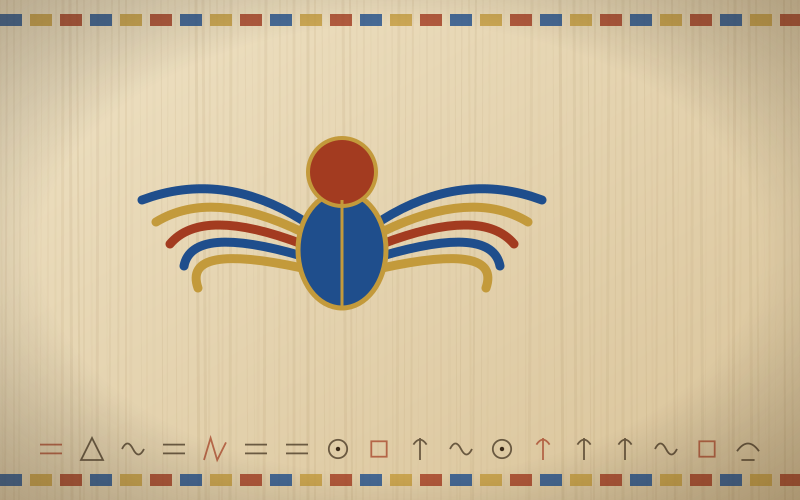
Among the amulets of ancient Egypt, the heart scarab holds a special place. It was not a generic lucky charm but an object with a precise task, linked to a precise moment in the destiny of the deceased. On it was engraved a spell that speaks directly to the heart, asking it not to betray its owner.
The heart for the Egyptians
To understand the amulet one must start from the heart, in Egyptian ib. It was not just an organ: it was the seat of thought, memory, will and moral character. When an Egyptian text says that someone «follows his heart», it means that he acts according to his own conscience and inclinations.
For this reason, during mummification the heart was normally left in the body, while other internal organs were removed and treated separately. The deceased had to keep his inner self in order to appear before the gods.
The scarab as a symbol
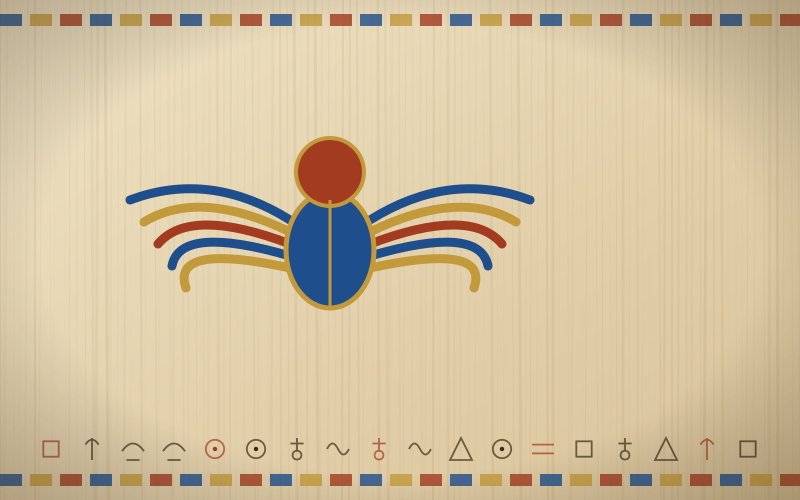
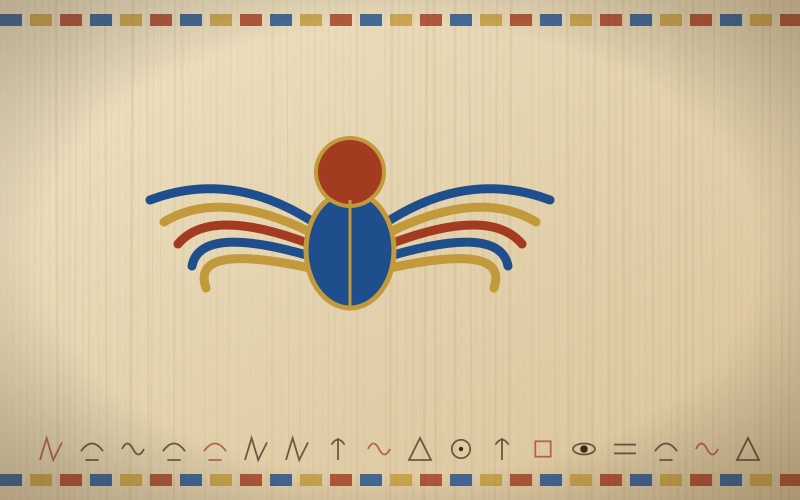
The scarab, in particular the dung beetle, was associated with the god Khepri, the morning sun. The insect pushing its ball was seen as an image of the sun rolling across the sky, and the young beetles emerging from the ground suggested the idea of self-generated birth. The Egyptian verb kheper, from which the god's name derives, means «to come into being», «to become», «to transform».
Joining the scarab to the heart therefore meant placing the centre of the person under the sign of transformation and rebirth.
What it looked like
The heart scarab differs from ordinary seal scarabs in several features:
- larger size, often several centimetres;
- dark or green stone, such as serpentine, basalt or other greenish stones, a colour associated with regeneration and vegetation;
- a flat inscribed base carrying the text of the spell and the name of the deceased;
- placement on the mummy's chest, among the wrappings, over the heart.
Some examples are mounted in gold or have a human face in place of the insect's head. The British Museum holds the heart scarab attributed to a king Sobekemsaf of the Seventeenth Dynasty, set in gold: it is among the oldest examples of this type of amulet associated with a ruler.
The spell of chapter 30B
The engraved text is a version of chapter 30B of the Book of the Dead. In a free translation, the deceased addresses his own heart with words of this kind:
O my heart of my mother, O my heart of my different ages: do not rise up against me as a witness, do not oppose me in the tribunal, do not be hostile to me before the keeper of the balance.
The spell goes on to ask that the name of the deceased not be made odious before the judges and that no lies be told against him. It is a short text of great intensity: the heart, which knows everything, might speak; the deceased asks it to stay on his side.
There is also a chapter 30A, with related content, and several other Book of the Dead spells devoted to the heart, for example to prevent it from being taken away in the afterlife.
Where it fits in the rite
The heart scarab is connected with the judgement scene, in which the heart of the deceased is placed on a balance opposite the feather of Maat. The amulet does not claim to change the outcome mechanically: the sources show rather a very human concern, that conscience might accuse the one who nevertheless wishes to be justified.
| Element | Meaning |
|---|---|
| Scarab | Transformation and solar rebirth |
| Green stone | Regeneration, vegetation |
| Spell 30B | Asking the heart not to testify against |
| Position on the chest | Protection of the centre of the person |
Spread and variants
Heart scarabs became widespread above all from the New Kingdom and remained in use for many centuries. Alongside them appear heart-shaped amulets, the hieroglyphic sign ib, often in red stones or glass. In some cases the scarab is set into a pectoral, with figures of deities on either side.
Many examples preserved in museums bear the owner's name carefully written, sometimes with titles and genealogy. Others, however, have a space for the name that was never filled in: a sign that they were produced in series and bought in advance.
A symbolic reading
From the perspective of an inner tradition, the heart scarab poses an ancient and ever-relevant question: what would our conscience say about us if it were called to speak? The spell does not cancel the judgement, but reveals the desire for reconciliation between what we have been and what we would like to be.
In short
- For the Egyptians the heart (ib) was the seat of thought, memory and conscience.
- The scarab recalls Khepri and the verb kheper, «to become».
- The heart scarab was large, often of green stone, placed on the mummy's chest.
- It carried chapter 30B, in which the deceased asks the heart not to testify against him.
- The amulet is tied to the judgement scene and the weighing of the heart.